
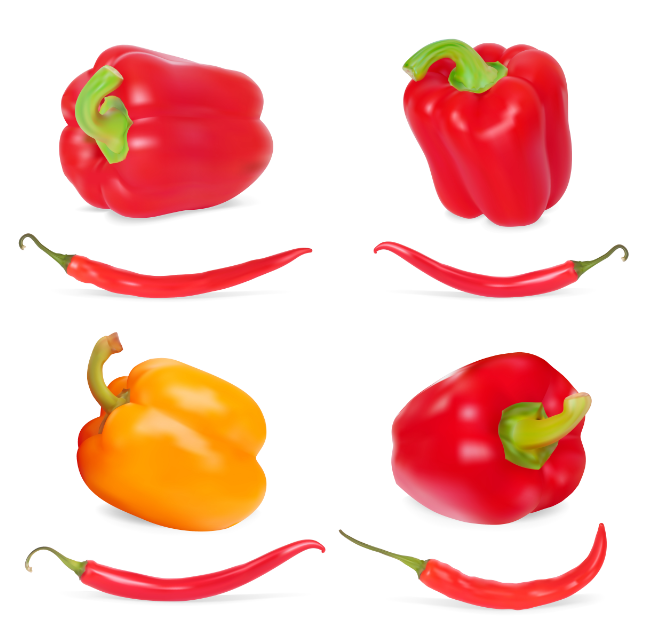
You’ve doubtless heard the word capsaicin, and are probably at least somewhat familiar with the definition. Likewise, you might have heard the word capsicum. They sound similar, and they are related. However, they are not the same thing. So, what’s the difference?
Capsaicin
When it comes to capsaicin and capsicum, the former is a specific phytochemical contained within a pepper’s flesh and pith. There are other, similar chemicals found in peppers that are related to capsaicin, and carry similar-sounding names, as well. Capsaicin is responsible for creating the sensation of heat when you bite into a pepper, as well as for the burning sensation if you were to cut a pepper and somehow get the juice or reside into your eyes.
Capsicum
When discussing capsaicin and capsicum, the latter can be more than one thing. For instance, the family that the plant falls into is called capsicum. Capsicum is also the name for any fruit from a plant in the family (the peppers themselves). All capsicum species are native to the Americas, although they have now been distributed far and wide around the world, and have seen a significant increase in their diversity.
There are up to 27 different species in the family, although only five are considered “domesticated”. It should also be noted that each species can contain multiple types of peppers. For instance, capsicum annuum includes bell peppers, poblano peppers, ancho peppers, jalapeño peppers and more.
Capsaicin and Capsicum: Concentration Questions
The amount of capsaicin in any pepper varies greatly, even between peppers of the same species. For instance, while the jalapeño falls around 5,000 on the Scoville Scale due to its level of capsaicin, the bell pepper rates at 0, and has no capsaicin at all, even though they are the same species. Other factors that affect capsaicin concentration include growing conditions, soil nutrients, water scarcity and more.
Capsaicin and Capsicum in Medical Treatments
Capsicums are important in the medical world for one thing – their concentration of capsaicin. This is extracted through a chemical leeching process, and then added to other ingredients to create treatments for a wide range of conditions. For instance, you can now find several brands of cream on the market designed as topical applications for the treatment of conditions ranging from severe arthritis to lower back pain and sprained muscles.
Higher concentrations are used in some patches created to help treat neuropathy in diabetics and HIV patients. It is even being experimented with for its use against cancer, particularly pancreatic and prostate cancer, although lung cancer is also reportedly treatable with capsaicin.
If you’re considering the use of capsaicin based treatments, particularly topical formulations, be aware that it will most likely cause a tingling or burning sensation in the skin for the first several applications, but this will eventually fade. It may also take up to two weeks to notice full effectiveness from a cream or ointment.
Source:-
https://www.ncbi.nlm.nih.gov/pubmed/3328791