
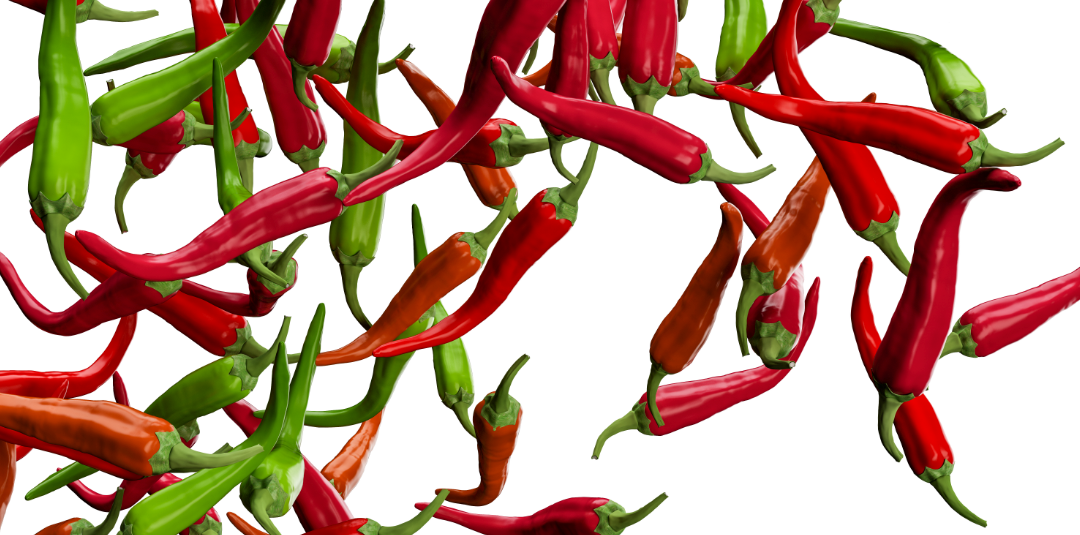
You’ve heard about capsaicin, the component of peppers that creates a sensation of heat on your tongue and throat. Chances are good that you have at least a passing acquaintance with hot foods – perhaps you’ve sampled Mexican or Tex-Mex dishes and enjoyed the spiciness. Of course, chances are also good that you’ve heard the word pronounced in many different ways. If you’re wondering how to pronounce capsaicin, let’s take a look at the word, its origins, and how it should sound when you say it.
The Origins of Capsaicin
According to Merriam-Webster, the word capsaicin stems from the New Latin word capsicum, which is the name given to the genus of plants where this component is found most strongly. Capsicum comes from the Latin word, “capsa”, which means box. However, it may also have originated with the Greek work “kapto”, which means to gulp.
Capsicums are related to the nightshade family (of which the potato is also a member), and are peppers. Virtually all peppers fall into this family, including sweet (or bell) peppers. Most are native to North, Central and South America. In addition to being eaten as foods, members of the capsicum family have also been used as medicines for thousands of years.
Properties of Capsaicin
Technically, capsaicin is an irritant to mammals, and it has no color of its own. It has been valued for a very long time as both a flavor enhancer in spicy foods, and for its health benefits. You can find it as the active ingredient in any number of topical creams, where it is used as an analgesic, or pain reliever. In this form, it is used to treat a number of conditions, including muscle soreness and even osteoarthritis. It is also used to treat pain from neuralgia. Some studies show that it has a beneficial effect on cluster headaches, and it can even treat skin problems and mouth sores stemming from chemotherapy in cancer patients.
According to the University of Maryland, capsaicin has also been useful in attaining weight loss, as well as treating ear infections (in a highly diluted form), and is being investigated for anti-tumor properties, which may make it an invaluable tool in the fight against many different forms of cancer.
Prior to using any form of capsaicin, consult with your physician. Over the counter products are generally safe to use, although they should never be applied to cracked skin or to open wounds. Again, consultation with your physician is always a wise decision.
How to Pronounce Capsaicin
Depending on where you live, you might hear capsaicin pronounced in one of several different ways. In the southern US, the most common pronunciation is cap-say-sin. In other areas, you might hear it pronounced something like cap-seh-cin, or even cap-sa-sin. However, these pronunciations really incorrect. It is actually pronounced cap-say-uh-sin.
No matter how you say it, capsaicin is a powerful medical aid, and a wonderful addition to many dishes. Whether you like it hot, hotter, or hottest, you have capsaicin to thank.