
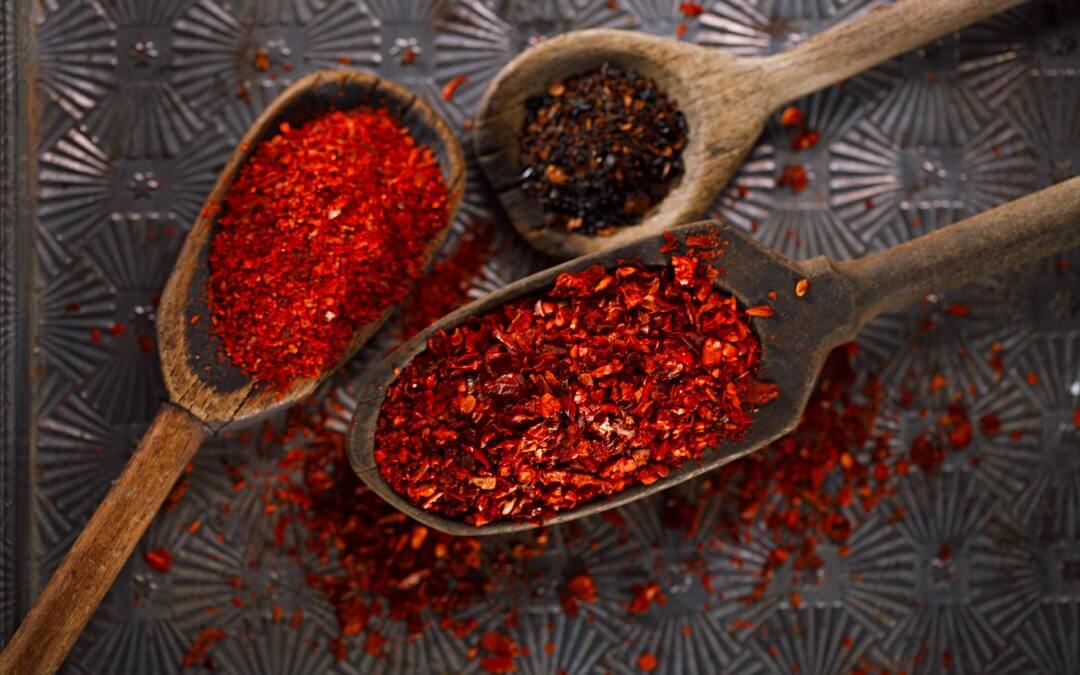
Hot peppers are, well, hot. There’s no question about that. However, all peppers are not created equal. Some are hot, and some are almost nuclear in their ability to burn the mouth. This is a direct result of the concentration of capsaicin in the pepper’s pith and flesh, and it’s rated on the capsaicin scale, better known as the Scoville scale. What is this scale and what should you know about it?
The Origins of the Capsaicin Scale (Scoville Scale)
The Scoville scale was developed back in 1912 by Wilbur Scoville, as a way to determine the “pungency” of different peppers. Unlike other tests that might rely on things like liquid chromatography, this scale is based on human experience. That means a couple of things. First, the capsaicin scale is actually based in what you might find in the real world. Second, it’s not infallible. That’s because the scale is based on what human taste testers experience. Sure, those testers are supposed to be trained, but it still leaves room for human error, as well as the fact that no two people experience the same event in precisely the same way.
How the Capsaicin Scale Works
The capsaicin scale is actually pretty simple, and is very similar to the way that capsaicin is extracted from peppers for manufacturing and commercial use. First, a specific weight of peppers is dried and then macerated (crushed or ground). Then, the weight is steeped in alcohol (like vodka). Finally, it is diluted with sugar water. The dilution is increased sequentially until the taste testing panel members are unable to notice the heat. The panel consists of five people, and a majority (three of the five) must be unable to sense the heat.
How Does Your Pepper Stack Up on the Capsaicin Scale?
Different peppers have varying concentrations of capsaicin in their pith and flesh. They also have very different flavors. Wondering how your preferred pepper stacks up against others? Here’s a quick rundown of just a few of the world’s most beloved hot peppers:
- Carolina Reaper, Trinidad scorpion, Komodo dragon pepper, Naga Viper pepper, infinity chili – Up to 2,200,000 on the Scoville scale (note that these can be as low as 855,000)
- Red Savina – Up to 580,000 (as low as 350,000)
- Standard habanero, Datil pepper, Jamaican hot pepper, bird’s eye pepper – Up to 350,000 (as low as 100,000)
- Cayenne, Tabasco, Chinese and Guntur peppers – Up to 50,000 (as low as 30,000)
- Jalapeno, Fresno and wax peppers – Up to 10,000 (as low as 3,500)
- Poblano, Pasilla and Peppadew peppers – Up to 3,500 (as low as 1,000)
- Banana peppers and pimentos – Up to 1,000 (as low as 100)
Note that while bell peppers are part of the wider capsicum family, and technically the same species as jalapenos, they rate a 0 on the capsicum scale because, due to a genetic mutation, they cannot produce capsaicin.
There you have them – some of the world’s most popular peppers and how they rank on the capsaicin scale.