
Ethiopia is a large country located on the Horn of Africa that is largely known for its archaeological treasure that dates back millions of years.
However, to people from all over the world, Ethiopia is popular because of its unique cuisine. If you haven’t heard of it before, you may be wondering if Ethiopian food is spicy.
This isn’t a yes or no question, though, so let’s explore it in detail.
An Eclectic Mix of Flavors
Not all Ethiopian food is spicy, but plenty of it is. If you’re ordering it at a restaurant, you’ll definitely want to ask about any dish before getting it. A lot of times, it’s simply taken for granted that you already know. With so many flavors and ingredients in almost every Ethiopian dish, many menus just don’t have the space to point out which ones will set your mouth on fire.
This also brings up a larger point about Ethiopian food. Spicy dishes certainly exist in abundance, but it would be impossible to truly generalize this kind of cuisine with just a single word.
You have to remember that Ethiopia is a country with a heritage that goes back before recorded history. Cultures from all over the world passed through and numerous civilizations rose and fell since the beginning of time.
Along the way, Ethiopian food became spicy, sour, sweet and everything in between. Any given menu could feature all kinds of different dishes made from meat, vegetables, fruits, bread and countless spices.
Still, for the sake of this piece, we’ll introduce you to some types of Ethiopian food that arespicy.
Doro Wat
Wat is an Ethiopian stew made from red onions, clarified butter mixed with ginger (known as niter kibbeh), garlic, berbere (a popular spice) and any number of other spices. After that, all kinds of different meats and/or vegetables may be added for different types of wat.
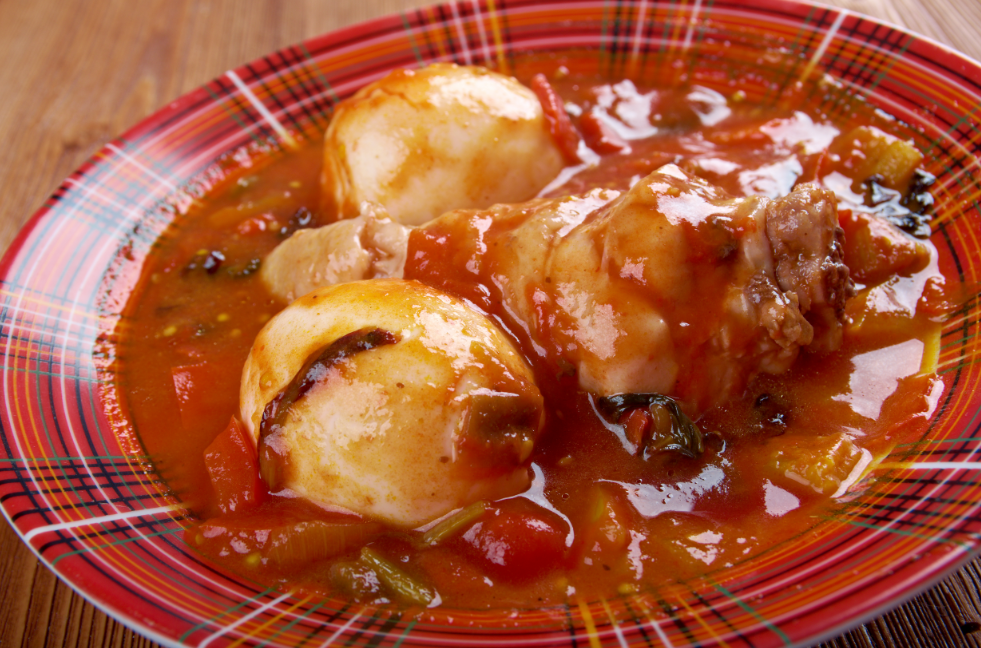
Doro wat is a version made with chicken. The ingredients for this Ethiopian food are so spicy that it is notorious for its intense red coloring. This is usually due to the large amount of berbere used, but other spices might be thrown in, as well.
Dark meat from chicken is usually used and even whole boiled eggs. It’s a lot like the Ethiopian version of a spicy chicken chili, albeit a little thicker.
As the ingredients used to make this Ethiopian food are spicy but not too exotic, it’s also a very popular dish all around the world. If you can get your hands on some berbere, you shouldn’t have much trouble making it in the comfort of your own kitchen.
Kitfo
If you like steak tartare, this is an Ethiopian food that’s spicy and very similar. Imagine thin-cut steak that gives you a kick with every bite.
Just like traditional steak tartare, this recipe uses minced raw beef, but there is no raw egg added. Instead, the beef is tossed in a very hot spice called mitmita, which is even hotter than the aforementioned berbere mentioned in the last recipe. Niter kibbeh (also mentioned in the last recipe) is added, too.
You then use slices of injera, a sourdough-type flatbread with a slightly spongy texture, to scoop up pieces into your mouth. This bread will help quell some of the spice if you’re not overly fond of the heat.
A similar version known as gored gored follows the same preparation except the meat is cut into small cubes.
YetsomBeyaynetu
For people who want to try Ethiopian food that’s spicy and vegetarian-friendly (or even vegan-friendly), yetsombeyaynetu is easy to recommend.
Like just about every Ethiopian dish, this one isn’t shy on portion size. Generally, it comes with some type of split pea or lentil stew (there are many varieties in Ethiopian cuisine), kale and sils, which a spicy type of tomato stew.
Again, you’ll want to use some delicious injera in place of silverware to eat this dish.
Minchet
On the other hand, if you have no issue dining on meat, then there’s a fantastic beef stew that is plenty spicy known as minchet.
Often, this stew is placed in the middle of a masheberawi, a traditional plate of mixed meat. Simmered red onions, berbere and ground beef are all mixed together with a boiled egg or two served over the top.
You can sometimes ask for a less spicy version of this stew, as well. It just depends on how it’s prepared: one bowl at a time or in a larger container.
Tibs
This Ethiopian stir-fried meat isn’t always served spicy, but a lot of people prefer this dish made with a good helping of berbere.
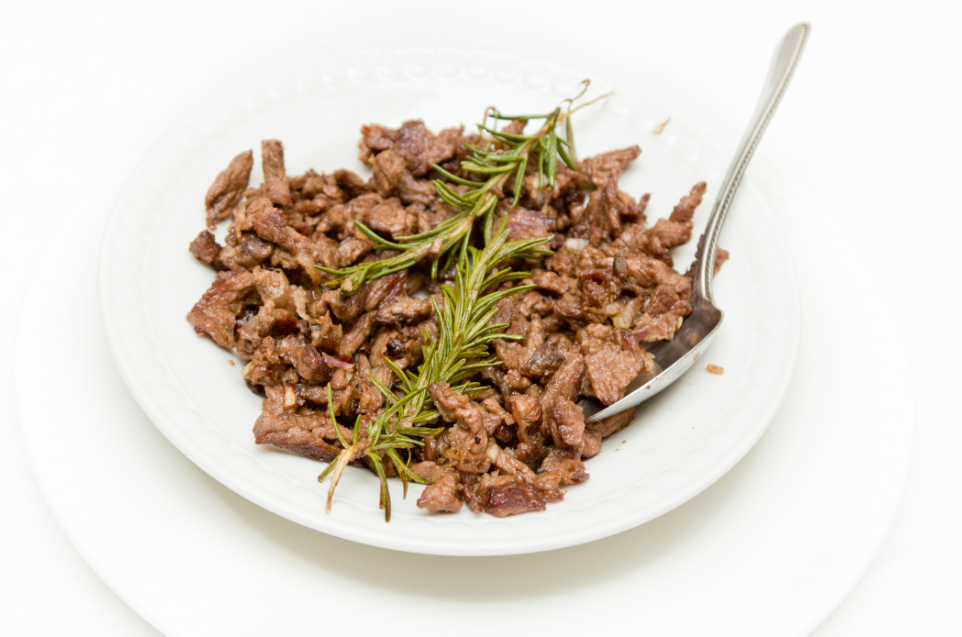
The simple, unassuming recipe used to make this meal is actually packed with flavor. This stir-fry is made with peppers, onions and an assortment of other vegetables mixed with goat, lamb or beef. Niter-kibbeh is used as a sauce and gives it a very satiating effect.
Mesir Wat
Allright, here’s one more for the vegetarian crowd that doesn’t like meat but does love heat. This form of Ethiopian stew is packed with flavor. It’s made with red lentils, sautéed onions, cardamom, berbere and an assortment of other spices. If you’re a fan of the types of stews used in American comfort food, you’ll most likely love this wat.
What to Expect When Eating Ethiopian Food
Spicy dishes are definitely a staple on the Ethiopian menu, but there is one other very prominent trait worth bringing up here.
Eating in Ethiopia has always been about friends and family. It’s a very communal activity. You’ll very rarely see people in this country simply eating by themselves.
This tradition tends to transcend borders, so if you’re eating at an Ethiopian restaurant, don’t be surprised when your food comes on a large platter meant to be shared.
Also, if you’re on a date when enjoying Ethiopian food, you may wish to practice the tradition of gursha. This means literally feeding your mate, usually right from your hand. You can scoop up some stew or meat with a slice of injera and plop it into their mouth.
Although, you might want to save that for date number two.