
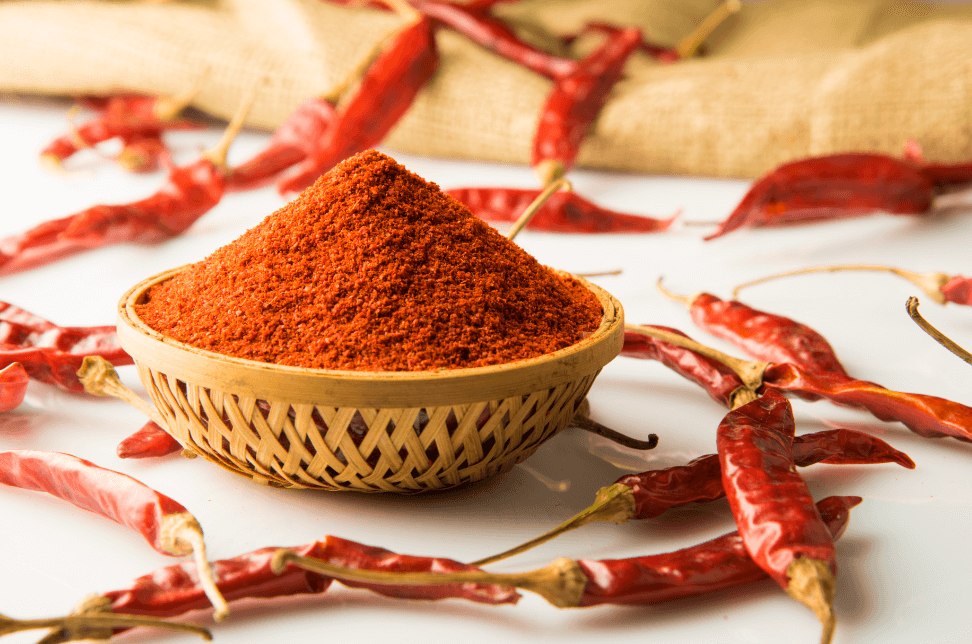
As a species, we’ve been eating hot chili peppers for more than 6,000 years. While today’s diner is probably attracted to hot food for the delicious flavor of spicy cuisines, many centuries ago, spice was used as a food preservative. In fact, there is ample evidence that a specific ingredient in peppers, called capsaicin, was actually developed as an anti-fungal, anti-bacterial agent to protect the fruit of a pepper plant.
Due to these properties and others, capsaicin (pronounced cap-SAY-sin) is also now used in modern medicine, as well as in law enforcement, self defense, and much more. With so many different uses, what exactly is pure capsaicin anyway? Why do chilies make capsaicin, and how did we figure out how to use it for medicine and other areas?
Quick Explanation of Capsaicin
Are you wondering what is pure capsaicin? This is a chemical compound created by peppers. There are glands in the walls of peppers that create this chemical, in uneven concentrations. The capsaicin chemical is made up of carbon, hydrogen, oxygen, and cobalt, a mineral element that is the primary component of vitamin B. This chemical compound creates heat by generating a chemical reaction with the pain sensors in the mucus membrane. The moment these sensors come into contact with capsaicin, a chemical called substance P is released into the blood stream, which the brain interprets as the sensation “hot”.
Typically, when we talk about “pure capsaicin”, we are talking about capsaicin that has been extracted from peppers. The extracted capsaicin is an odorless, colorless, tasteless oil-like substance that can be added to food, medicines, and other mixtures for various purposes.
Why Do Plants Make Capsaicin?
There are several theories as to why plants make pure capsaicin. Really hot peppers (or, peppers with a high concentration of pure capsaicin) can cause some very negative side effects. In some cases, eating extremely hot peppers has been known to cause nausea and even hallucinations. For this reason, some scientists believe that plants produce capsaicin as a defense mechanism to stop mammals from eating the fruit.
One piece of evidence backing this theory up is the fact that capsaicin has no effect on birds whatsoever, because they lack the sensation receptor channels in their mouths. Birds tend to thrash seeds open and then spread seeds from the fruit they eat, while mammals tend to crush seeds in their teeth and either consume them, or ruin them entirely with the crushing maneuver. So it’s easy to see why a plant might evolve to defend against mammals without hurting any birds that may want to eat it. A study performed in 2001 seemed to prove this theory, when rodents like mice and packrats avoided eating capsaicin-rich peppers in favor of some non-spicy peppers, while birds showed no preference for either.
However, some scientists criticize this theory. If capsaicin is produced to ensure that a plant’s longevity is guaranteed, wouldn’t every type of spicy pepper produce capsaicin? After all, all plants want the same thing – to spread their seeds. But there are many types of peppers that don’t produce capsaicin at all. Where do these peppers fit into this theory?
Another theory declares that, because capsaicin has anti-fungal characteristics, plants may make this chemical in order to guard against fungi. The reason that plants need to protect themselves from fungus is insects. Tiny insects puncture the sides of the pepper to drink the juice, leaving behind miniscule puncture marks. We may not be able to see them, but fungi can grow in even the smallest places. However, the more capsaicin a pepper contains, the less it is affected by mold or fungi.
Scientists suggest that the growth patterns of peppers with pure capsaicin support this theory. For example, in areas of the world where there is more rain, more insects, and more prevalent fungi, there is also a much higher population of capsaicin-rich peppers. It has even been shown that the more of these elements exist in a pepper’s native growing region, the higher in capsaicin it will be on average.
However, this theory still doesn’t explain why some plants in the same family make no capsaicin at all. After all, even in dry regions, bugs still exist, and fungi can still grow. A team of scientists working in Bolivia explained it this way: to produce capsaicin, pepper plants have to devote a very high amount of resources and energy. The capsaicin molecule is large, and its production takes up a lot of nitrogen, something plants need to build protein. Additionally, when plants expend this much energy, they develop stomata (holes on the leaves) which means they lose water and can’t photosynthesize light as effectively.
Knowing all that, the team theorized that in areas where fungi isn’t as big of a threat, plants may have evolved other, more efficient methods of defense. While the trials to test this new theory are still undergoing, it’s an interesting idea that certainly seems to make sense at first glance.
Case Study: How Pure Capsaicin Affects the Human Body
Sometimes the best way to understand what something is, is to take a look at how it affects you. If you’re asking “What is pure capsaicin?”, then consider its use in pepper spray. When you first look at the way capsaicin reacts with the body, it sort of seems like pepper spray shouldn’t really be that effective.
Consider that when capsaicin comes into contact with pain receptors, the first thing that happens is that the brain receives a signal from substance P, and immediately releases a bunch of pain-relieving hormones and feel-good chemicals like dopamine and endorphins. And in fact, capsaicin has been shown to slow the reaction time of substance P, or even eliminate its usefulness entirely, dulling the pain of spicy foods even more over time. So why, then, does pepper spray hurt badly enough to control riots and stop an attacker? Shouldn’t the brain be releasing those happy hormones and shutting down the pain?
To answer those questions, you need to know how pepper spray works, and a few key differences between pepper spray and eating spicy peppers.
Pepper spray’s real name is Oleoresin Capsicum, or OC spray. As you can see, capsaicin is right in the name, because it is the most important ingredient. Pure capsaicin is mixed with a carrying agent, such as water, oil, alcohols, or other carriers. This is then put into a pressurized can that uses something like nitrogen or carbon dioxide to hold the mixture under very high pressure. Releasing the mixture results in a wide spray with a pretty far reach.
A person using pepper spray is typically aiming for the eyes, but it’s easy to get the spray on a person’s nose or mouth as well. When pepper spray touches a person’s eyes, it immediately begins burning the cornea. While most cases do not involve long-term damage, there could definitely be permanent damage done to a cornea that comes into contact with pure capsaicin. If a person inhales pepper spray, their airways could become inflamed, and they could suffer from a variety of severe health issues.
If we eat capsaicin all the time, and have been for 6,000 years or more, shouldn’t we be pretty much okay with being sprayed with it? Why does pepper spray hurt so much? The answer is in the concentration. When we eat peppers, we aren’t eating pure capsaicin. We are eating a small concentration, just like people who accidentally swallow an apple seed are consuming a small amount of the chemical responsible for arsenic.
But pepper spray relies on a huge concentrated dose of pure capsaicin, more than twice the amount contained in the world’s hottest pepper. In some cases, depending on the other ingredients used in an OC spray, the possible side effects of being sprayed include arrhythmias, respiratory problems, neurologic problems, cardiac arrest, and death.
Don’t give up eating spicy foods, though! Here’s why pepper spray is different from capsaicin-rich food:
- Within your mouth, saliva works to breakdown chemicals and soothe the effects of capsaicin. Saliva and mucus coat the inner lining of the esophagus and stomach as well, helping to prevent against any potential pain or issues capsaicin might cause.
When an OC spray is sprayed into the eyes, however, the only defense mechanism the body has is tears. And capsaicin is water-repellent. Crying does nothing but spread the heat down your face. Without mucus and the many things that make up saliva, you’d need a substance like milk to get out the burn.
- OC spray contains other ingredients that can work to worsen the effect of pure capsaicin. There may be a water-based solvent that is intended to spread the pepper spray over the face; there may be nitrogen or carbon dioxide in the can, to pressurize the pepper spray. Inhaling these chemicals can also produce adverse reactions in the body.
As you can see, pure capsaicin can be an extremely dangerous substance, But not always! Case Study: Pure Capsaicin Helping Us Cure Pain
On the other side of the coin is the fact that pure capsaicin can be used to great effect. When not used in extremely high concentrations, not combined with other harmful ingredients, and not sprayed into areas of the body with no natural defenses suitable for capsaicin, this chemical can be a major medical help.
Capsaicin has been used in topical pain relieving creams for many years now. Just as capsaicin causes feel-good hormones and blocks pain in your mouth, it can do the same thing when it comes into contact with pain receptors elsewhere in the body. Studies have shown that patients with arthritis or who have recently had hand surgery, are more likely to prefer a capsaicin cream to a placebo cream, despite the redness that the cream can cause. Similar studies in managing the neuropathic pain of cancer patients showed comparable results.
Capsaicin is currently being studied as part of the cure for certain digestive system cancers, as well as part of the cure for type 1 diabetes. In fact, should the trials regarding capsaicin and diabetes return affirmative results, it would mean that we now understand diabetes in an entirely new way, as a disease as much related to the nerves and hormones as to the pancreas. And the more we understand about a disease, the more we can create new cures for other diseases.
Capsaicin is still undergoing many tests to understand the potential negative effects it could cause. Redness, swelling, and even a mild burning sensation on the skin are all normal for those using a capsaicin cream. The interesting thing is that the body typically becomes used to the capsaicin exposure, and these early symptoms tend to go away over time. However, the exciting future that pure capsaicin offers is worth continuing the many trials. Even if we only discover that capsaicin is useful for pain alone, this could revolutionize the way we create and use pain medicine.
The Verdict
So, in answer to your question, “What is pure capsaicin?”, you should now have a very thorough understanding. Pure capsaicin is a chemical that a pepper plant produces, possibly to protect itself from being eaten by mammals, or possibly to prevent the growth of fungi. This chemical can cause pain in the body, but it can also be a part of some amazing healing compounds. Not all concentrations of capsaicin are created equal, and extremely high concentrations should be avoided, as they can be deadly. But capsaicin can also be extremely helpful in medicine and in your personal health. Don’t be afraid to try a hotter pepper to get an extra kick of feel-good hormones next time you are eating your favorite spicy meatball dish.
Capsaicin can be extracted to be used in medicine or other areas, but you can also get the same health benefits from pure capsaicin just by eating more peppers. And any excuse to eat more spicy foods in a win in my book.